Photo Listicle
27 Playroom Ideas You'll Want to Recreate Right Now
Twenty-seven playroom ideas that actually survive a real toddler. Storage that hides the toy shelf chaos, layout moves for tight rooms, soft pastels, and the wall murals worth pinning.
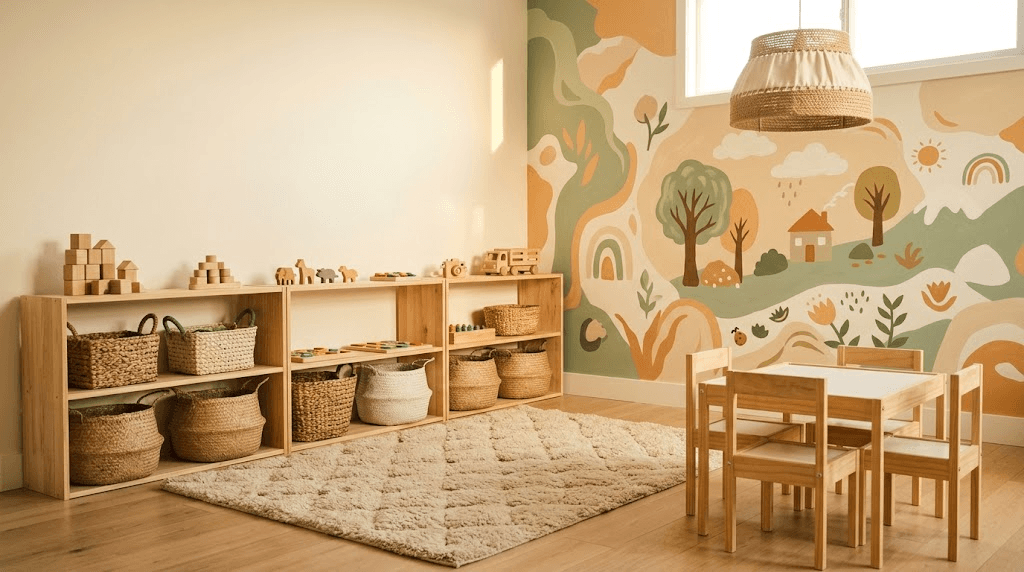
Playroom ideas live or die on whether the storage works. The aesthetics are easy. The hard part is what happens at 6:47 PM when the room has been used and the bins are everywhere. The twenty-seven ideas below are organized around that reality, not around a styled photo shoot.
Four moves: the storage backbone, the layout that keeps zones distinct, the wall and floor moves that make it photograph well, and the small finishing pieces that earn the Pinterest save. Most work in playroom corners, basement conversions, and shared-with-the-living-room setups.
The storage backbone
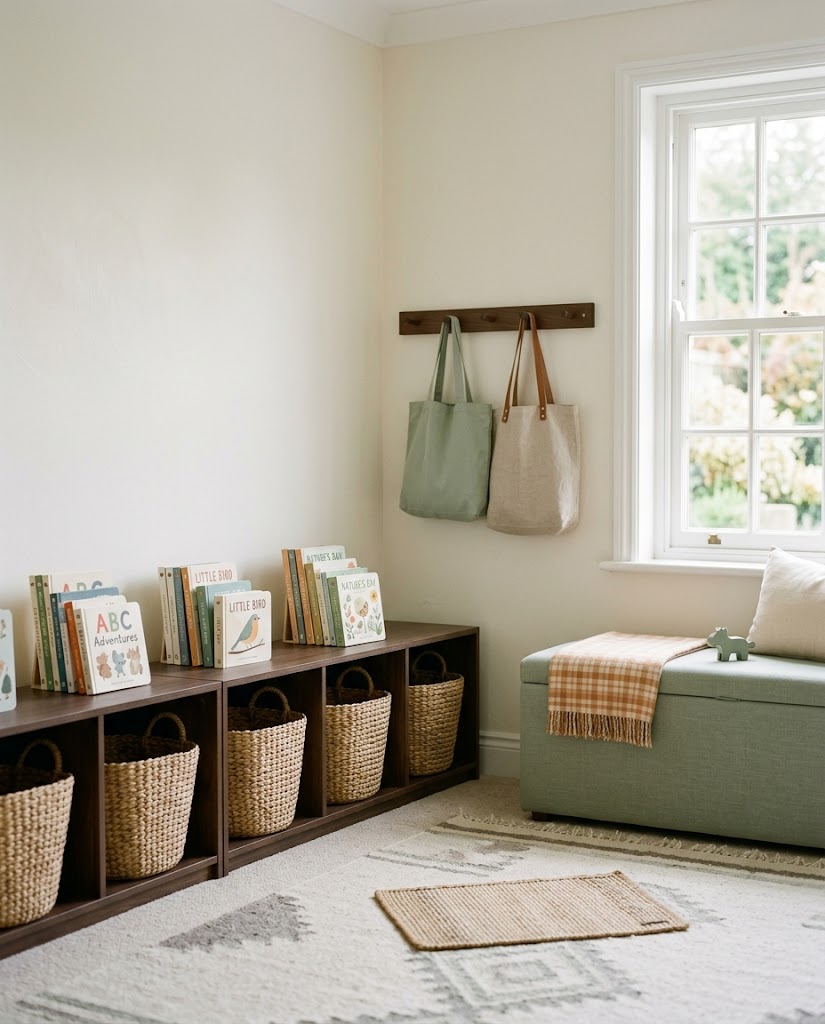
Storage that disappears is the whole game. The pieces below all close, contain, or hide. None of them rely on the kids putting things back perfectly, because they won't.
- Low open shelving along one full wall. IKEA TROFAST or Kallax laid horizontally. Bins fit underneath; shelves above hold what gets touched.
- Matched woven baskets on the bottom shelves. Six to eight identical baskets contain the chaos and read intentional.
- A storage bench under the window. Hinged top, holds a Costco-bin's worth of Lego.
- Wall-mounted peg rail at adult height. Holds tote bags of art supplies, sports gear, dress-up costumes.
- A toy chest at the room's exit. The 'before you leave the room' sweep happens here. Soft-close lid is a non-negotiable.
- Underbed-style rolling bins on casters. For the playroom that doubles as a bedroom or guest space.
- Wall-pocket organizer for art supplies. Crayons, scissors, glue. Hung at kid-shoulder height.
The layout that keeps zones distinct
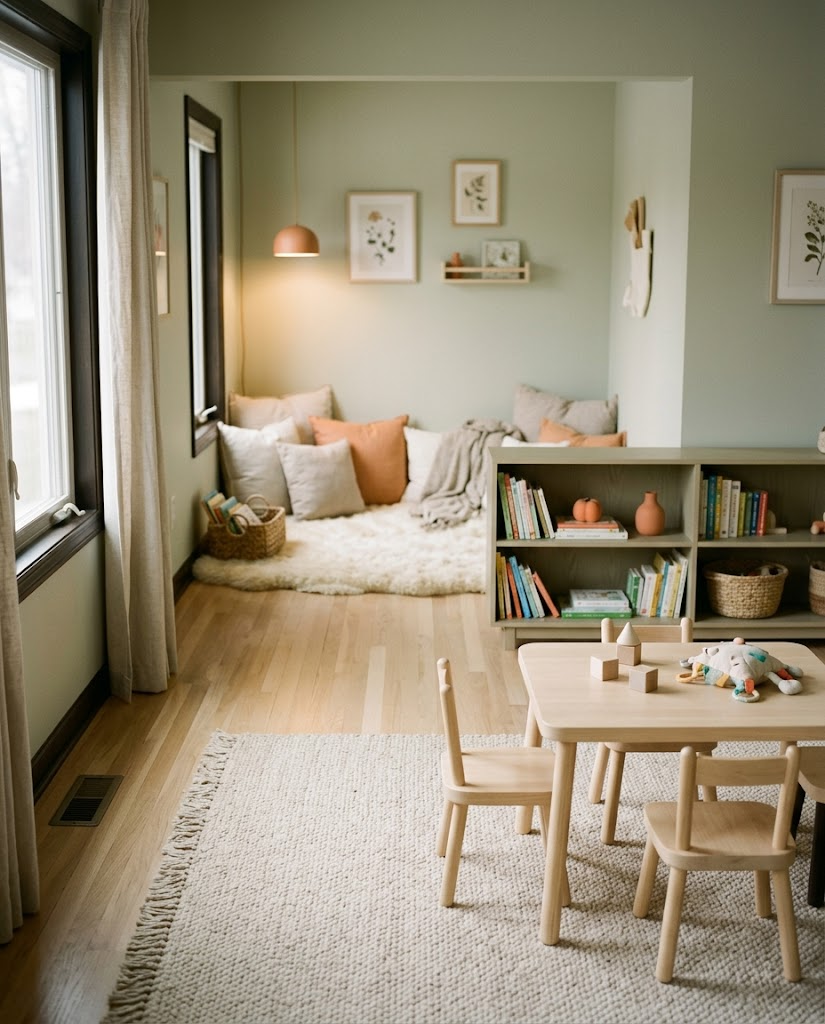
Playrooms work better when you can see three things happening from the doorway: a table for craft, a floor for build, and a corner for read. The rug placement and the bookshelf height do all the zoning. No walls required.
- Three rugs to separate three zones. A wool rug under the table, a sheepskin in the reading corner, an open floor for build.
- Low bookshelf as a soft divider. 36 inches max, so the parent at the door still sees everything.
- Play table centered on its own rug. One table beats two; two beats three.
- Reading nook on the wall opposite the door. First view in is the calm corner, not the chaos.
- A soft floor cushion the kids can drag. Mobile seating beats fixed every time.
- A magnetic chalkboard on one wall, low. Replaces the floor-art-everywhere problem.
- A pendant light over the table, not centered in the room. Defines the table zone visually.
Walls and floors that photograph well
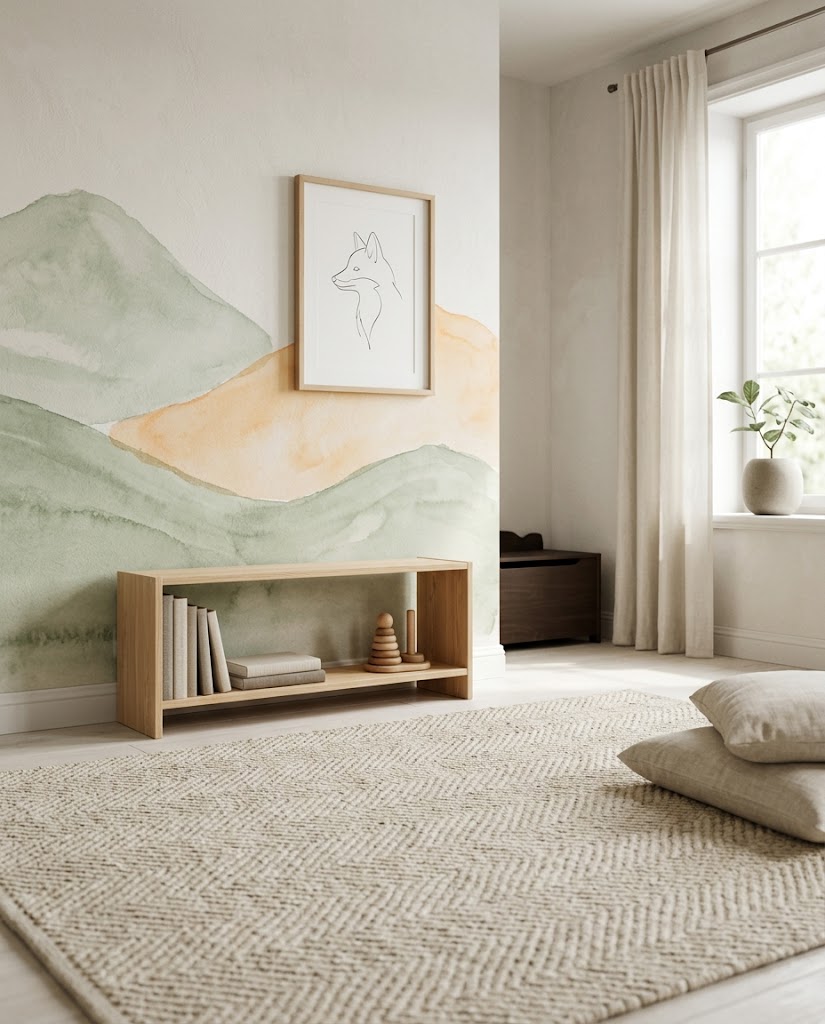
These are the moves that turn the playroom into a saved-pin. They also age out of cute-baby territory faster than you'd think — most of these survive into the big-kid years.
- Hand-painted mural in three soft tones. Rolling hills, abstract shapes, or a tonal landscape. Sage and apricot are the most-pinned palette.
- Peel-and-stick wallpaper on a half-wall. Below chair-rail height, kid-art-friendly above.
- Magnetic primer on one wall, then matte paint. Magnets hold up artwork without push-pins.
- Wool rug or large washable rug. Ruggable's playroom collection holds up to spilled juice.
- A single framed line-art animal. Replaces the busy printed canvas every kid's room had in 2018.
- Curtains in cream linen or muslin. Soft, washable, no patterned-fabric overload.
- Painted ceiling in a soft pastel. A 2026 move that costs $40 in paint and reads boutique.
Finishing touches that earn the Pinterest save
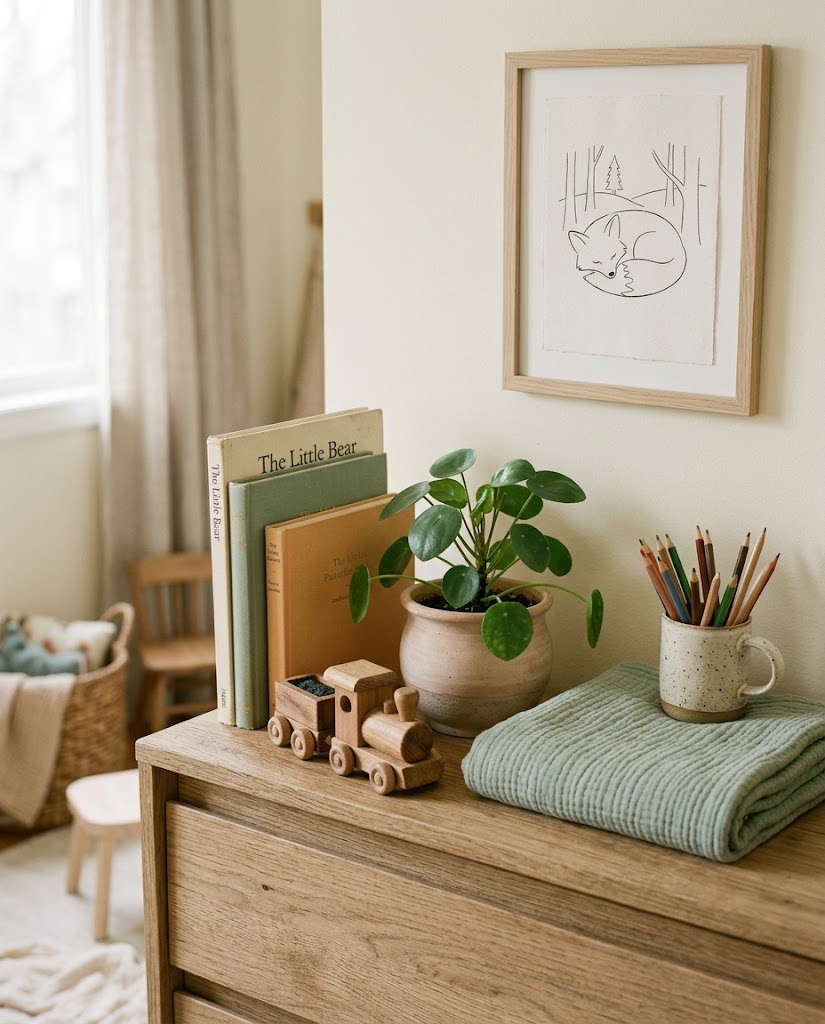
The small pieces are what get the room saved. None of these are essential. All of them are the difference between a functional playroom and one parents stop and screenshot.
- A wooden play kitchen if you have the space. Pottery Barn Kids and IKEA both make versions under $200.
- A reading teepee or canopy. Soft, removable, age-flexible.
- One real plant in a heavy ceramic pot. Pothos or pilea, kid-safe varieties.
- A small ceramic vase of dried wheat. Reads editorial, costs $12, lasts forever.
- A wooden toy bin labeled with a leather tag. Replaces the printed-vinyl-letter labels.
- A single oversize basket for the giant stuffies. The big bear gets a home.
FAQ
Frequently asked
What's the best playroom layout for a small space?
Push storage to one wall, leave the center floor open, and use a single low rug to define the play zone. Skip the second piece of furniture; the rug does all the visual work. For rooms under 100 square feet, a wall-mounted desk that folds down beats a freestanding play table.
How do I keep a playroom organized day-to-day?
Two systems do most of the work. First, every toy has a labeled bin so 'put it back' has an actual target. Second, do a five-minute sweep at the same time every day (before dinner, before bath). Storage that closes hides the rest. Don't aim for spotless — aim for resettable.
What's the most-pinned playroom color in 2026?
Soft sage paired with warm apricot is leading, with cream and oat as the neutral baseline. The bright primary palette of 2018 has wound down. Soft pastels and muted earth tones photograph better and age into the big-kid years without a redecorate.